Choosing the right solar mounting rail is essential for building a secure, durable, and reliable rooftop solar mounting system. Different roof materials and structures require different mounting solutions to ensure proper load transfer, roof protection, and long-term installation performance.
For solar installers, EPC contractors, distributors, and project developers, selecting a suitable solar panel mounting rail involves more than choosing an aluminum profile. Roof type, attachment spacing, wind loads, snow loads, rail span, and installation requirements should all be considered.
Next, Art Sign will explain how to select solar mounting rails for metal, tile, and slate roofs, and outline the technical factors to consider when purchasing solar mounting systems.
The roof structure is one of the most important factors when selecting a solar mounting rail system. The mounting hardware must be compatible with the roof profile and transfer the loads from the solar panels safely to the supporting roof structure.
Before selecting a rail, consider:
· Roof material and profile
· Roof structure and load-bearing capacity
· Available attachment points
· Wind and snow load requirements
· Rail span and support spacing
· Waterproofing and corrosion protection
· Installation and maintenance requirements
The following sections explain common rooftop mounting considerations for different roof types.
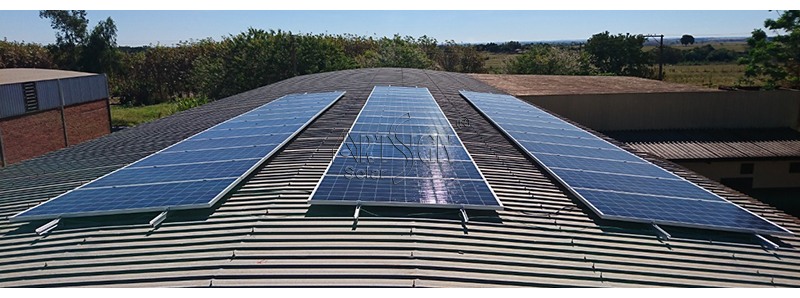
Metal roofs are widely used in commercial and industrial buildings. However, different metal roof profiles require different mounting solutions.
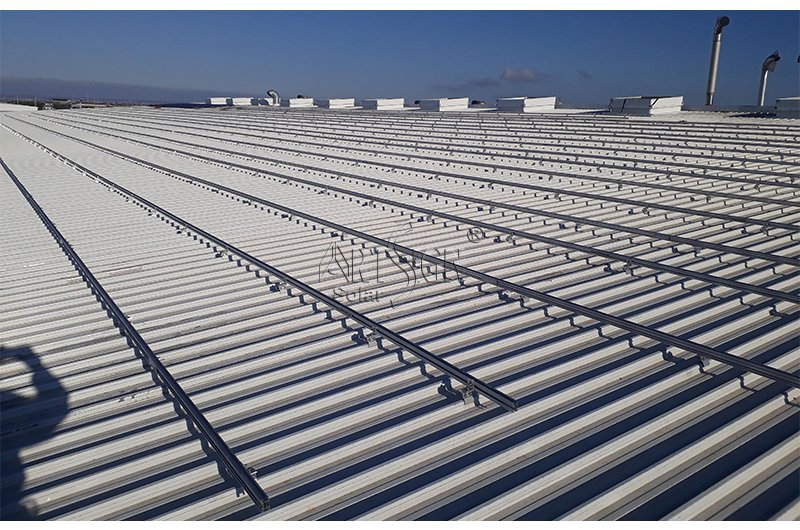
For trapezoidal and corrugated metal roofs, solar mounting systems commonly use mini rails or L-feet to connect the mounting rails to the roof structure.
Aluminum solar mounting rails are often used because they offer a lightweight structural solution and can be customized for different installation layouts.
When selecting a mounting solution, consider:
· Compatibility with the metal roof profile
· Fastener type and attachment location
· Waterproofing details around roof penetrations
· Rail height and clearance beneath solar modules
· Structural capacity of the roof and attachment points
The appropriate mounting method should be selected according to the roof construction and project engineering requirements.
Standing seam metal roofs can use specially designed seam clamps to secure solar mounting rails without penetrating the roof surface, provided that the clamp is compatible with the specific seam profile and approved for the required loads.
This non-penetrating approach can help avoid unnecessary roof penetrations and reduce the risk of water leakage associated with incorrectly installed fasteners.
When choosing standing seam clamps, buyers and installers should check:
· Seam profile and dimensions
· Clamp compatibility with the roof material
· Clamping force and mechanical performance
· Rail connection compatibility
· Manufacturer installation instructions
· Project-specific wind load requirements
Using compatible clamps and following the specified installation procedure are essential for a reliable standing seam solar mounting system.
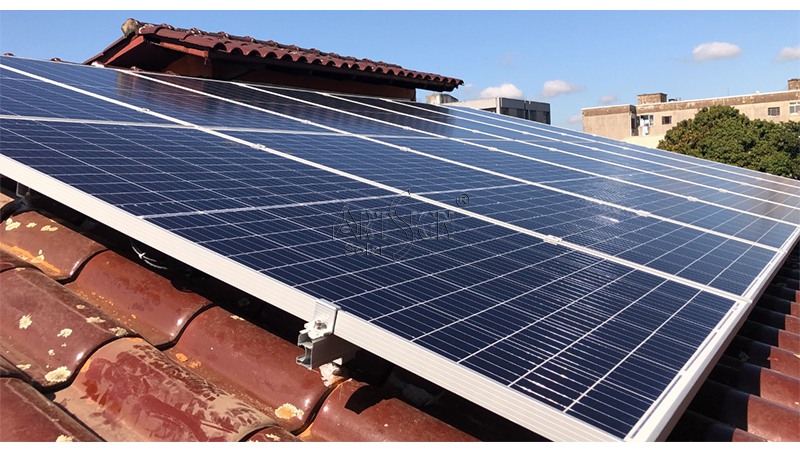
Tile and slate roofs require specialized mounting hardware because these roofing materials can crack if excessive pressure is applied directly to their surfaces.
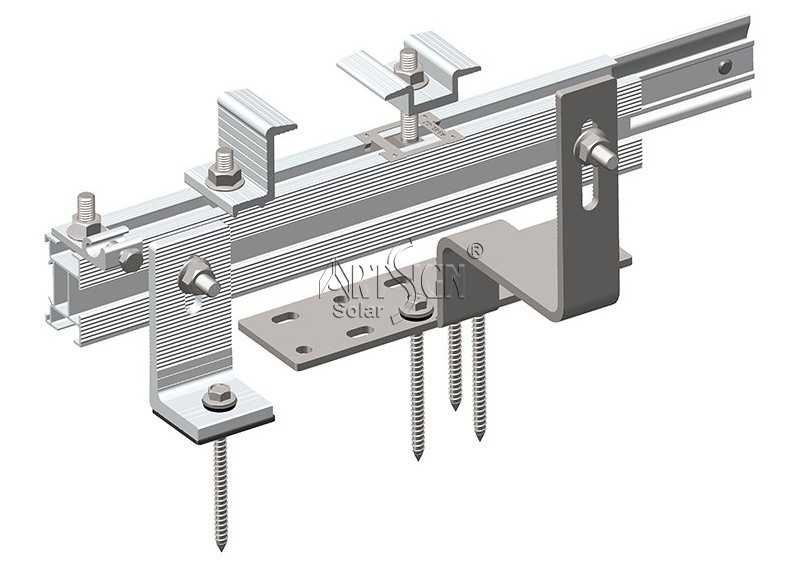
Solar mounting systems for these roofs commonly use roof hooks or tile hooks to connect the rail system to the supporting roof structure.
Stainless steel roof hooks are one option for projects requiring durable roof attachment components. The correct hook design and fixing method depend on the roof construction and supporting structure.
When selecting solar mounting hardware for tile and slate roofs, consider:
· Tile or slate dimensions and profile
· Roof hook shape and height
· Supporting rafter location
· Fastener type and embedment requirements
· Clearance between the hook and roofing material
· Rail height adjustment and alignment
The roof hooks should transfer the loads to the appropriate structural members rather than relying on the tiles or slates themselves to carry the mounting loads.
Height-adjustable rail connections can also help installers achieve better alignment on uneven roof surfaces.
Choosing between a standard aluminum rail and a deeper rail profile depends on the structural requirements of the project.
There is no single rail profile that is suitable for every rooftop installation. The selection should consider:
Wind and snow loads vary depending on the project location, building height, roof shape, and applicable engineering standards.
Projects in areas with high wind speeds or heavy snow loads may require different rail profiles, shorter support spacing, or additional attachment points.
The final design should be verified using the relevant local building codes and structural calculations.
The distance between roof attachments affects the bending and deflection of the solar mounting rail.
A longer rail span may require a stronger profile or additional support points. Therefore, installers and engineers should evaluate the rail's mechanical properties together with the proposed attachment layout.
Different aluminum rail profiles have different cross-sectional dimensions, weights, and mechanical properties.
When comparing rail options, check:
· Profile height and width
· Wall thickness
· Aluminum alloy and temper
· Section properties and mechanical strength
· Surface treatment
· Compatible rail connectors and clamps
Art Sign can provide customized aluminum rail profiles according to project requirements. The final profile selection should be confirmed through engineering evaluation.
In addition to roof compatibility and rail strength, several other factors affect the performance of a rooftop solar mounting system.
Solar mounting systems may combine aluminum rails, stainless steel fasteners, and other metal components.
When dissimilar metals are in electrical contact in the presence of moisture, galvanic corrosion may occur under certain conditions.
To reduce corrosion risks, consider material compatibility, surface treatment, drainage, and suitable isolation components.
Depending on the mounting design, EPDM rubber pads, isolation washers, or other separation materials may be used at relevant contact points.
The correct corrosion protection method should be confirmed according to the materials, environment, and system design.
Aluminum rails expand and contract as temperatures change. This movement should be considered when designing long rail runs.
Rail splice connectors can join separate rail sections, but installers should follow the manufacturer's connection instructions and allow for the required expansion movement where specified.
Correct splice positioning and installation help avoid unwanted mechanical stress and maintain the intended structural performance of the mounting system.
Solar mounting rail lengths can be customized according to project layouts, transportation requirements, and installation preferences.
Customized rail lengths may help reduce on-site cutting and material waste, depending on the project design.
Before ordering, buyers should confirm:
· Required rail length
· Profile dimensions
· Connector compatibility
· Surface treatment
· Packaging and transportation requirements
XIAMEN ART SIGN CO., LTD. manufactures solar mounting structures and related mounting components, with a stated production capacity of 15–20 MW of mounting structures per month.
Our product range includes:
· Aluminum solar mounting rails
· Aluminum roof brackets
· Stainless steel roof hooks
· Solar module clamps
· Grounding clips
· Customized solar mounting components
For projects with specific roof structures or installation requirements, customized product solutions can be discussed according to drawings, dimensions, and project specifications.
Whether you are sourcing aluminum rails for metal roofs or stainless steel roof hooks for tile roof installations, choosing compatible mounting components is important for the overall performance of the solar mounting system.
Looking for a solar mounting rail manufacturer for your next project?
Contact Art Sign to discuss your roof type, mounting requirements, and customized solar mounting solutions.
Email: sales@artsign.net.cn
WhatsApp / WeChat / Skype: +86 18030235875
Website: https://www.artsign.net.cn/
Solar mounting rail lengths vary by manufacturer, profile, and project requirements. Commonly supplied lengths may include 2,100 mm, 3,150 mm, 4,200 mm, and 6,000 mm, but these should not be treated as universal industry standards.
Art Sign can discuss customized rail lengths according to project layouts and transportation requirements.
Yes. Aluminum solar mounting rails can be used in metal roof mounting systems when the rails, brackets, fasteners, and roof attachment components are compatible with the roof structure.
For systems involving contact between dissimilar metals, suitable material compatibility measures and isolation components should be considered to reduce the risk of galvanic corrosion.
The choice depends on several project factors, including wind load, snow load, rail span, attachment spacing, and the mechanical properties of the rail profile.
A deeper or stronger rail may be required for projects with higher structural demands. However, the correct rail should be selected through project-specific engineering calculations rather than profile height alone.
Art Sign can discuss rail profile options based on project drawings and technical requirements.
Aluminum rails expand and contract as temperatures change. For long rail runs, the mounting design should account for this movement.
Rail splice connectors join separate rail sections. Installers should follow the manufacturer's instructions regarding connector positioning, fastening, and any required expansion allowance.
Tile roofs commonly require specialized roof hooks or tile hooks that connect the mounting rails to the supporting roof structure.
The appropriate hook depends on the tile profile, roof construction, rafter position, and project loads. Installers should select compatible hardware and ensure that the roofing tiles are not carrying unintended structural loads.
Yes. Art Sign provides customized solar mounting components, including aluminum rails and roof mounting hardware.
Buyers can share their project drawings, required dimensions, roof type, and installation requirements for further discussion.
Unit 301, No. 600 Guankou South Road, Jimei District, Xiamen, China
Tel : 0086 592 6266951 0
Whatsapp :+8618030235875
Email : sales@artsign.net.cn
Teams : Artsign Energy





 IPv6 network supported